















If you're building your website from scratch, you need a designer who makes sure it looks the way you and, above all, your users want it to. You also need a developer who builds the foundation of your website.
Since everyone uses the internet to find deals and everyday necessities, web development matters more than ever for a company's success.
That means web design and web development are among the things you can't ignore when you start your business.
The truth is that designers and web developers are responsible for different areas and have different tasks when building a website.
Below, we'll look at and explain the differences between web designers and web developers. That way, you'll have the information you need to choose the right one for your website.
Here's our guide to telling the roles of web designers and web developers apart. So what exactly is the difference between a web designer and a web developer?
- What is web design?
- Who is a web designer?
- What is web development?
- Who is a web developer?
- How Google measures user experience
- When do you need a web designer and when a web developer?
- Websites designed with SEO in mind
- Maintaining your website
- The difference between a web designer and a web developer
- Should you hire a web developer or a web designer?
What is web design?
Web design covers the user experience side of building websites, as opposed to software development.
Web design used to focus mainly on designing websites for desktop browsers. But since the mid-2010s, designing for tablet and mobile browsers has become more and more important.
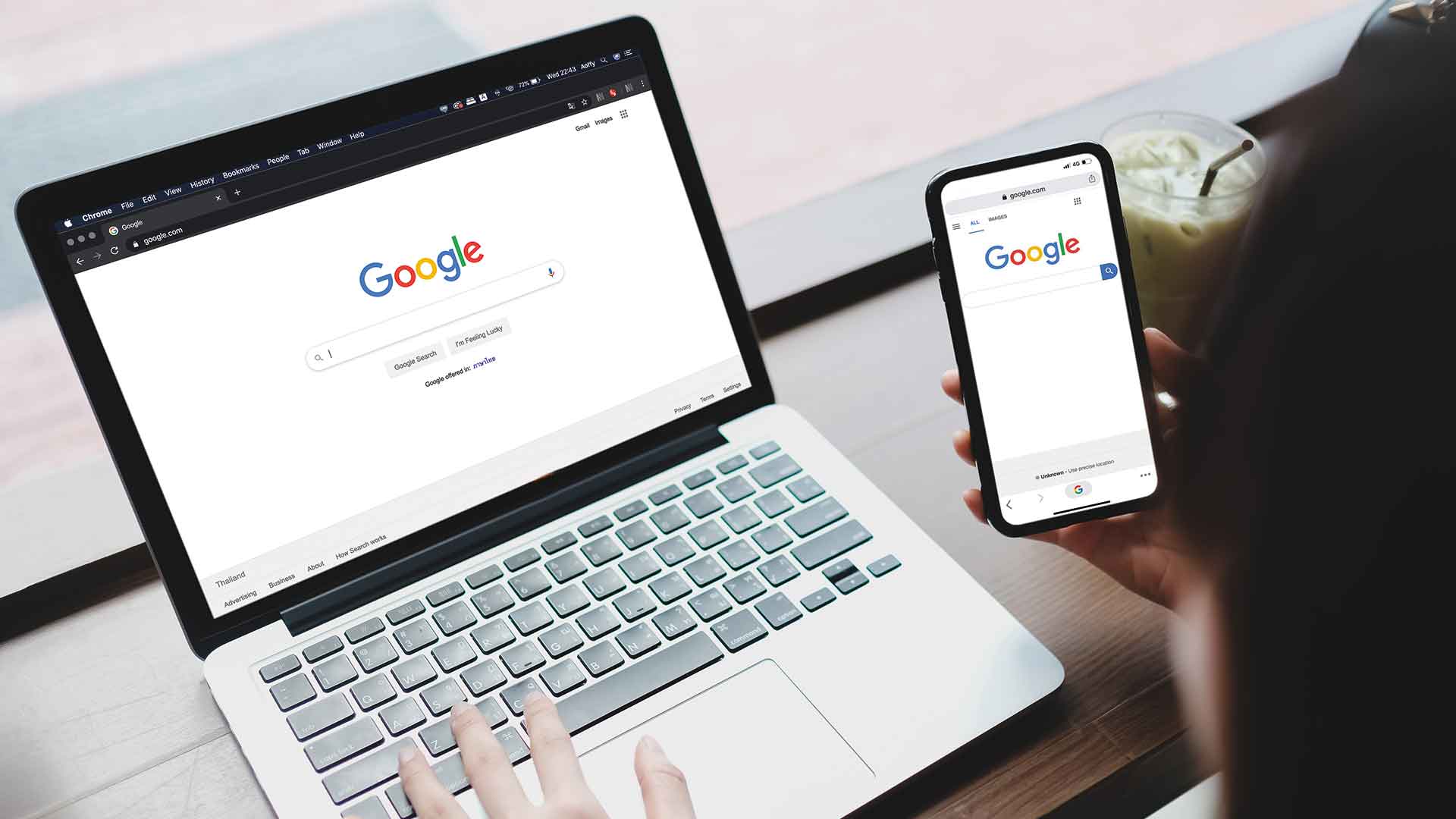
Web design spans several areas, including user experience (UX), user interface (UI) and SEO (search engine optimization).
Overall, web design should take care of a website's or app's usability by considering its structure (i.e. the layout), its visual aesthetics (e.g. fonts and colors) and even its content.
Who is a web designer?
A web designer makes sure a website looks good. That means a web designer works on the layout, the look and sometimes the content of the website.
A website's look refers to the images, fonts and colors it uses. A good website design should be visually appealing, easy to use and right for the brand and the site's audience.
So what does a web designer do? A web designer's main job is to shape the overall look and style of the website. They use various software such as Illustrator, Corel Draw, Photoshop and others to make your website more attractive.
Web designers usually have a specialty, so there are different types of web designers depending on their role. Some of these roles are:
User interface (UI) web designers
UI web designers help improve how users interact with an interface or with elements on your website.
They do this by translating brand values and complex ideas into a website that's simple and pleasant to navigate.
User experience (UX) web designers
Part of a UX web designer's job is to keep your visitors engaged. They know how to build a website your specific audience enjoys using.
To get there, they do extensive research into the website's needs and user demographics, and they run plenty of site restructurings and prototype tests.
After all, if visitors enjoy your website, they're likely to recommend it and even come back. That's how you grow your visitor numbers.
How is UX different from UI? UX focuses on research to build a solid foundation that ensures an excellent user experience. UI, on the other hand, deals with the look and design of your website.
Visual designers
Visual designers are a mix of UI and UX. They not only improve the user experience using their programming and creative skills, they also solve design problems.
Visual designers also help bring a brand's unique tone and style to life. They master every aspect of web design, and their tasks vary widely depending on your needs.
What to look for in a web designer
So what does a web designer do, and which skills should you look for when hiring one? Web designers need to be creative to make your website visually appealing. They should also have solid graphic design skills. Some web designers even have a preferred platform, for example a web designer who specializes in customizing WordPress templates.
Others know their way around most major platforms, which lets them work with more clients.
Good communication skills are a must for any web designer. They let designers work smoothly with developers, clients and everyone else involved in a project. Web designers should also know how to interpret a client's needs and turn them into a website design.
What is web development?
Web development is the process of building applications and websites for intranets (private networks) and the internet.
Web development can involve several specializations, including work on a web server, network security configuration, web engineering and, to a certain extent, web design.
In everyday use, though, "web development" usually means writing markup and code, leaving design aside.
In that sense, web development doesn't mean web design, because the term refers to writing code and markup and to back-end development tasks in general.
So when you compare web designers and web developers, the two can sometimes look like separate topics, but the line isn't always that clear.
Who is a web developer?
Web developers are commonly called programmers. Developers take design concepts from web designers and turn them into a fully functional website.
Comparing the two, developers usually specialize in building applications, while web designers focus on what users enjoy.
Web developers often use different software and tools such as ASP.NET, Python, JavaScript, Node.js, jQuery, PHP and others.
Their main goal is to build you a website that runs smoothly. Web developers also work with visual designers, UI designers and UX designers to build web pages based on the designers' drafts.
Like web designers, web developers have specific roles, which we'll look at below.
Front-end developers
Front-end developers are also called client-side developers. Their work is closer to web design than to back-end development, because it involves using JavaScript, HTML and CSS to build features users can see, such as customer inquiry forms.
Front-end developers have programming skills too, but they build the frameworks users interact with.
Back-end developers
Your website's core structure is built in the back end. Back-end developers have programming skills and use complex languages like SQL, Java and C#.
These developers handle tasks users never see, because they program on databases and web servers rather than in browsers (unlike front-end developers).
That means back-end developers build logical, functional websites with various programs. They also take time to test and fix bugs.
Full-stack developers
Full-stack developers work across different stacks, or layers, covering both the front end and the back end. When it comes to web development, you get the full package, because they're experts in every area.
What skills do web developers have?
Web developers need to learn several programming languages. Front-end developers need JavaScript, CSS and HTML.
Back-end developers need Java, Python, Ruby and PHP. Web developers also use database systems such as Oracle and SQL.
Finally, web developers should have good communication skills so they can work smoothly with clients, web designers and everyone else involved in a project.
Web developers' skills should allow them to work directly with clients. That way, they can interpret what clients need and deliver fast, high-performing features for their website in return.
How Google measures user experience
In general, Google wants to give everyone who uses its search engine the best possible user experience.
That means Google expects websites on the first page of search results, and especially in mobile results, to keep their visitors engaged and give them a great experience.
If your visitors run into slow load times or can't find what they're looking for, they'll leave your site right away. Google Analytics records this as part of your website's bounce rate.
What happens if you and a competitor rank high for the same search terms, but your website has a higher bounce rate than theirs?
In that case, Google will probably rank your competitor above you, on the assumption that their website delivers more of what Google users are looking for with that query.
So if your website has high bounce rates, you need a team of experienced web developers, web designers, user experience specialists and SEO experts.
A team like that will help you figure out why visitors are clicking away from your website. Once they've identified the problems, they'll assign the right person to handle each one.
When do you need a web designer and when a web developer?
The table below lists different projects and who you should choose for each one. We want to help you understand when to bring in a web designer and when to bring in a web developer.
| Project | Who you need |
| Create new contact forms | Web developer |
| Edit videos and photos | Web designer |
| Design a layout for a new homepage | Web designer |
| Fix hosting or server issues | Web developer |
| Build mobile apps | Web developer |
| Develop the concept for new website branding | Web designer |
Websites designed with SEO in mind
For your business to succeed online, you need a company website that ranks higher in search results. For most businesses, the most important source of visitors is organic search engine optimization.
Once your website ranks better for your most important keywords, you'll see more visitors on your site.
You also won't have to keep paying for ads on Bing Ads, Google Ads and similar services. There's a good reason you want to outrank your competitors in search.
Ranking on the first page of search results means more clicks to your website. In the end, SEO has three components: off-page SEO, technical SEO and on-page SEO.

Technical SEO and on-page SEO
On-page SEO covers optimizations that make it easy for search engine crawlers to understand your content. This ensures your website is indexed correctly for people searching online.
Technical SEO, on the other hand, is about optimizations you can make to your website's functionality, code or server so search crawlers can find your content easily.
Your web designers and web developers can take care of solid on-page and technical SEO from the moment you launch your redesigned or new website. They can do this by:
- Configuring your hosting server settings for the best possible performance
- Optimizing images and content within the design without sacrificing quality
- Writing clean, error-free code for your website
- Creating URLs with keywords in mind and using meaningful file names
- Including specific business details (such as phone number, name and address) in the body text, not just in the footer or header image
- Testing and debugging web applications before launch to make sure no conversions are lost to missing pages, slow loading or other hard-to-use features.
That's why you should work with web designers and web developers who keep search engine rankings in mind. That way, you get a website that runs smoothly, looks good and loads fast.
The emphasis on speed is there because Google has updated its algorithm so that websites with faster load times can rank better.
With faster performance, a website offers a better user experience on every device and ranks higher in mobile search results.
To make sure your website gets more mobile traffic from different search engines, make sure it runs smoothly and quickly.
Maintaining your website
Keep in mind that redesigning an old website or launching a new one is only the start of your digital marketing.
If you choose the right company for your web design, you'll also have access to services that improve your website's visibility and maintenance.
Before long, you'll see more leads, more social connections, more website traffic and more revenue. This ongoing work is a must for businesses that want to stay ahead of their competition.
If your company stops marketing its website while your competitors keep promoting theirs, they'll soon be the ones attracting customers and visitors online.
The difference between a web designer and a web developer
Now you know who web designers and web developers are. It's also important to know the differences between the two, because that will make your life a lot easier when it comes to your website.
So what's the difference between design and development? The table below gives you a quick overview of how web designers and web developers differ.
| Web designer | Web developer |
| Highly creative by nature. | Usually more technically minded. |
| Web design is about how a website looks and feels from the outside. | Web development is mainly about how a website works. |
| Web designers turn their clients' ideas into visually appealing designs. | Web developers turn web designs into fully functional websites. |
| Web designers often cover the aesthetic side. | Web development is about building user-friendly websites to the client's specifications |
| Web design tools include Sketch, Adobe Photoshop, Figma, Illustrator, etc. | Languages used in web development include CSS, HTML, Ruby, PHP, JavaScript, Python, jQuery, etc. |
Should you hire a web developer or a web designer?
This guide has covered the key differences between a web designer and a web developer. Many businesses prefer to work with a company like Mischler Webdesign that offers web development, design and marketing services.
That way, you work with a team of web developers and web designers who build your ideal website and web applications together.
You'll get the best results by having your company website designed and developed by a company that delivers a site people enjoy using and search engines can find.
Search optimization also makes sure visitors can find your website easily. So optimizing for usability increases the chances that visitors will find your website, use it and even convert.
Weitere Insights






Teile diesen Artikel